
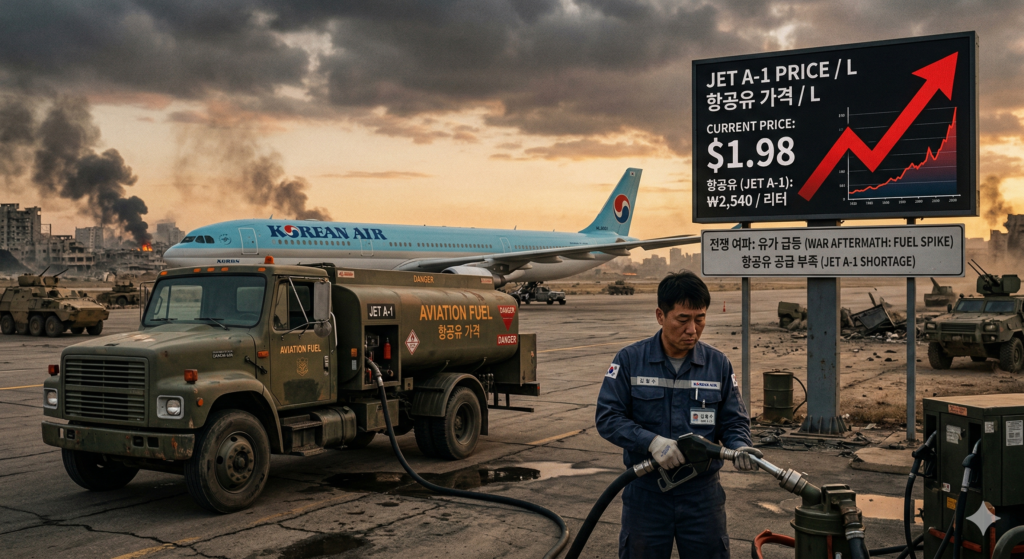
There are structural reasons why jet fuel costs far more than ordinary petroleum products—and they go well beyond simple oil price fluctuations.
1. It’s hard to produce Only about 7–8% of crude oil naturally yields jet fuel during standard refining. The rest requires additional advanced processing equipment, making the base production cost inherently high.
2. Quality control is extremely demanding Aircraft fly at altitudes where temperatures drop below -50°C. Even trace amounts of moisture in the fuel can cause freezing accidents. This requires ultra-precise water removal and means jet fuel must be consumed within approximately two months of production to prevent oxidation. Unlike gasoline or diesel, which can be stockpiled for 3–6 months, jet fuel reacts faster and more sharply to any disruption in the supply chain.
3. Wars have blocked key flight corridors With Russian and Iranian airspace designated as no-fly zones, airlines have been forced onto longer detour routes. The Tokyo–Helsinki route, for example, now takes 12 hours instead of 9. Aircraft crowded into narrower corridors sometimes fly at lower altitudes, consuming significantly more fuel—creating a vicious cycle of increased demand.
4. Military demand crowds out civilian supply During wartime, military aircraft secure fuel regardless of cost or availability. This directly reduces the supply available to commercial airlines, deepening the supply-demand imbalance.
5. Consumers absorb the shock through fuel surcharges Rising jet fuel prices translate almost immediately into higher fuel surcharges on tickets. On U.S.-bound routes, surcharges have jumped by tens of thousands of Korean won within a single month, dramatically increasing the real cost burden on travelers.
6. Is the “ticketing date” standard fair? Fuel surcharges are currently calculated based on the date of ticket issuance, not the actual travel date. Yet fuel is consumed on the day of the flight. This raises a legitimate structural question: shouldn’t the fuel price on the day of actual consumption be the one that counts? This ambiguity makes the cost-sharing arrangement between airlines and passengers increasingly opaque.
Conclusion: Jet fuel behaves like a perishable product — it cannot be stockpiled. In a world of geopolitical instability, even a small mismatch between supply and demand can send prices soaring, and that cost ultimately lands in your airfare.